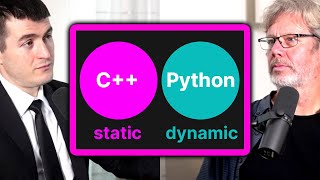
Web Reference: Aug 14, 2025 · Python is a dynamically typed language, unlike statically typed languages such as C, C++, or Java. In Python: You don’t need to declare a variable’s type explicitly. The type is determined automatically based on the assigned value. A variable’s type can change during program execution. In a dynamically typed language, objects still have a type, but it is determined at runtime. You are free to bind names (variables) to different objects with a different type. So long as you only perform operations valid for the type the interpreter doesn't care what type they actually are. I’m going to explain why Python is called dynamically typed by showing what actually happens when you assign values, pass arguments, store things in containers, and call functions.
YouTube Excerpt: You might think that
Information Profile Overview
Why Python Is Dynamically Typed - Latest Information & Updates 2026 Information & Biography

Details: $6M - $46M
Salary & Income Sources

Career Highlights & Achievements


Assets, Properties & Investments
This section covers known assets, real estate holdings, luxury vehicles, and investment portfolios. Data is compiled from public records, financial disclosures, and verified media reports.
Last Updated: April 5, 2026
Information Outlook & Future Earnings

Disclaimer: Disclaimer: Information provided here is based on publicly available data, media reports, and online sources. Actual details may vary.