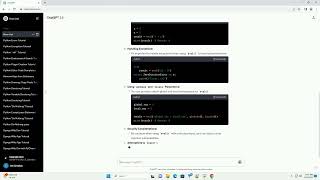
Web Reference: Python’s eval() allows you to evaluate arbitrary Python expressions from a string-based or compiled-code-based input. This function can be handy when you’re trying to dynamically evaluate Python expressions from any input that comes as a string or a compiled code object. pd.eval supports two different parser options when parsing the expression string to generate the syntax tree: pandas and python. The main difference between the two is highlighted by slightly differing precedence rules. Using the default parser pandas, the overloaded bitwise operators & and | which implement vectorized AND and OR operations with pa... Apr 25, 2025 · Dynamically evaluating code using Python eval () In this article I’d like to talk about the Python eval () function that can be used to evaluate any Python expression.
YouTube Excerpt: Why Using It? The main application of
Information Profile Overview
Eval In Python Dynamic Expression - Latest Information & Updates 2026 Information & Biography

Details: $10M - $34M
Salary & Income Sources

Career Highlights & Achievements


Assets, Properties & Investments
This section covers known assets, real estate holdings, luxury vehicles, and investment portfolios. Data is compiled from public records, financial disclosures, and verified media reports.
Last Updated: April 6, 2026
Information Outlook & Future Earnings

Disclaimer: Disclaimer: Information provided here is based on publicly available data, media reports, and online sources. Actual details may vary.