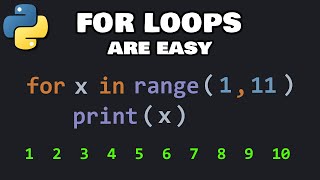
Web Reference: Definition and Usage The range() function returns a sequence of numbers, starting from 0 by default, and increments by 1 (by default), and stops before a specified number. Mar 10, 2026 · The range () function in Python is used to generate a sequence of integers within a specified range. It is most commonly used in loops to control how many times a block of code runs. Note: range () returns a lazy iterable, not a full list. It generates numbers dynamically instead of storing them all in memory.. Python Range () function explained The range () function generates a list of numbers. This is very useful when creating new lists or when using for loops: it can be used for both. In practice you rarely define lists yourself, you either get them from a database, the web or generate them using range ().
YouTube Excerpt: Mentorship to six figure software engineer - https://calcur.tech/mentorship ⚙️ Backend Engineering Mind Map ...
Information Profile Overview
The Python Range Function Does - Latest Information & Updates 2026 Information & Biography

Details: $12M - $48M
Salary & Income Sources

Career Highlights & Achievements






Assets, Properties & Investments
This section covers known assets, real estate holdings, luxury vehicles, and investment portfolios. Data is compiled from public records, financial disclosures, and verified media reports.
Last Updated: April 5, 2026
Information Outlook & Future Earnings

Disclaimer: Disclaimer: Information provided here is based on publicly available data, media reports, and online sources. Actual details may vary.